Top Mistakes First-Time Everest Base Camp Trekkers Make and How to Avoid Them
Climbing to Everest Base Camp is a dream for many people around the world. The idea of walking through the Himalayas, seeing giant snow-capped mountains up close and experiencing Nepalese culture is exciting. But for first-time trekkers, this adventure can sometimes become harder than expected. Many beginners make simple mistakes that could be avoided with a little preparation. Avoiding these mistakes will help you enjoy the trek, stay safe and make memories that last a lifetime.
Not Being Physically Prepared
One of the biggest mistakes first-time trekkers make is underestimating the physical challenge of Everest Base Camp. Even though the trek does not involve climbing Everest itself, it is still tough. You will be walking for 5–8 hours every day, sometimes on steep rocky trails. Many beginners think they can manage because they are generally active, but casual fitness is not enough.
To avoid this mistake, start training months before your trek. Go for regular walks, hikes or runs. Include exercises that strengthen your legs, core and back. Stair climbing or using a treadmill on an incline is also helpful. If possible, practice hiking with a backpack similar to what you will carry on the trek. Building your stamina before you start will make each day of trekking feel easier and more enjoyable.
Ignoring the Risks of Altitude Sickness
Everest Base Camp sits at an altitude of 5,364 meters (17,598 feet). At high altitudes, the air has less oxygen and your body needs time to adjust. Many first-time trekkers ignore this and climb too quickly. The result? Headaches, nausea, dizziness or even serious altitude sickness that can be dangerous.
The best way to avoid altitude sickness is to go slowly and allow your body to acclimatize. Take rest days when needed and don’t push yourself just to “keep up” with the group. Drink plenty of water, avoid alcohol and eat light energy-rich foods. Listen to your body. If you start feeling very unwell, descending to a lower altitude immediately is the safest choice.
Overpacking or Underpacking
Packing for Everest Base Camp can be tricky. Some beginners make the mistake of bringing too much stuff while others forget essential items. Carrying a heavy backpack every day will tire you out quickly and missing important gear can make trekking uncomfortable or even unsafe.
Here’s what first-time trekkers often get wrong:
- Too much weight: Don’t pack unnecessary clothes, gadgets or heavy items. Keep your backpack light and only carry what you really need.
- Missing essentials: Warm clothing, waterproof jackets, gloves, trekking boots, a sleeping bag and a hat are all must-haves. Don’t compromise on quality.
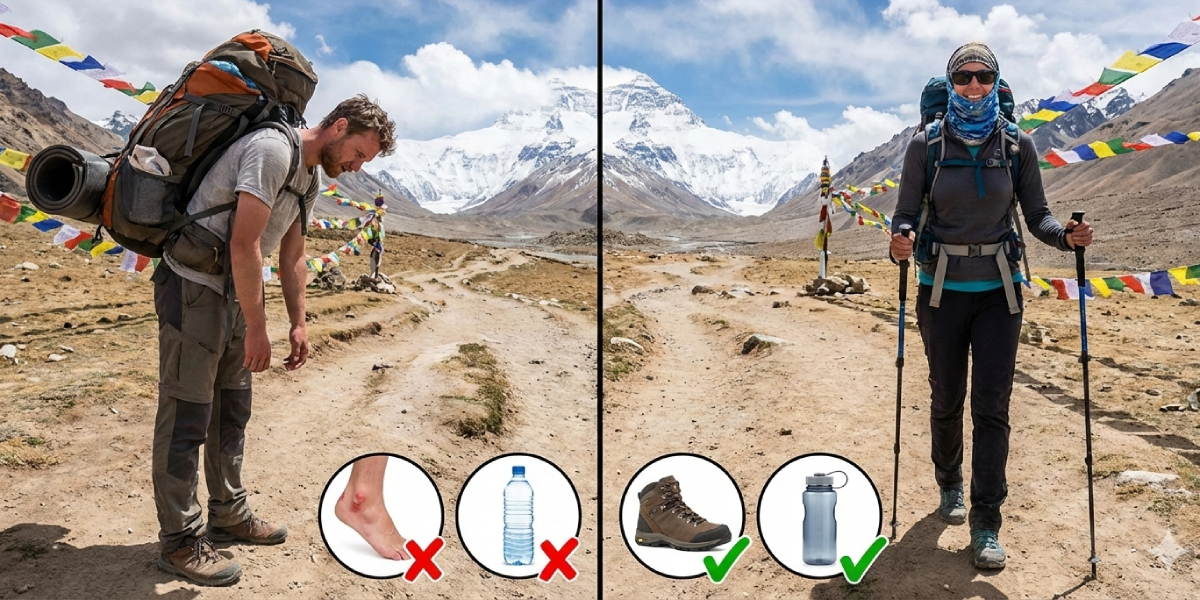
- Footwear mistakes: Many beginners wear shoes that are not designed for long hikes or rough trails. Good trekking boots with ankle support can prevent injuries and blisters.
Packing the right gear will make your trek comfortable and enjoyable. Make a checklist and pack smartly to avoid both overpacking and underpacking.
Not Choosing the Right Guides or Agencies
Another common mistake is assuming you can trek alone or picking an inexperienced guide or agency. Everest Base Camp is remote and the trails can be challenging. An experienced guide helps with navigation, logistics, safety and even emergencies. A reliable agency also arranges accommodations, meals and permits, which makes your journey smooth.
Always book with reputable operators who have trained guides and support staff. Look for reviews online and ask about their experience. Going with professionals may cost more, but it is worth it for safety and peace of mind.
Skipping Travel Insurance or Necessary Permits
First-time trekkers sometimes forget about travel insurance or the required permits for the trek. Insurance is not just a formality, it can save your life and money in case of emergencies like accidents, illnesses or altitude sickness.
For Everest Base Camp, you also need permits like TIMS (Trekkers’ Information Management System) and Sagarmatha National Park entry. Without these, you will not be allowed on the trails. Make sure your insurance covers high-altitude trekking and helicopter evacuation just in case. Handling these details before your trek avoids last-minute stress.
Disrespecting Local Culture
Nepal is rich in culture and tradition and many first-time trekkers forget this. Small actions like speaking loudly, littering or ignoring local customs can be disrespectful. It is important to remember that you are a guest in these communities.
Learn a few basic Nepali phrases such as “Namaste” (hello) or “Dhanyabad” (thank you). Respect local religious sites, follow trail rules and practice responsible tourism. Treat locals with kindness and respect and you will find that they welcome you warmly. Cultural respect also makes your experience richer and more memorable.
Relying Too Much on Technology
Phones, GPS apps and social media have become part of daily life, but in the Himalayas, they are not always reliable. First-time trekkers sometimes depend too much on technology, which can fail due to weak signals or battery problems.
Bring a physical map, learn to read trail signs and listen to your guide. Smartphones are useful for photos or emergencies, but don’t rely on them for navigation alone. Being prepared for a “low-tech” situation makes your trek safer.
Forgetting to Stay Hydrated and Eat Properly
Walking for hours at high altitude uses a lot of energy. Many beginners underestimate the importance of staying hydrated and eating enough. Dehydration and low energy can increase the risk of altitude sickness and make your trek miserable.
Drink water regularly even if you do not feel thirsty. Eat small meals frequently that are rich in carbs and protein. Snacks like nuts, chocolate or energy bars can help maintain energy during long trekking days. Proper hydration and nutrition are as important as physical preparation.
Final Tips for First-Time Trekkers
Everest Base Camp is challenging, but with preparation and awareness, it can be one of the most rewarding experiences of your life. To sum up, here are the key tips to avoid mistakes:
- Train your body for months before the trek.
- Ascend slowly and allow for acclimatization.
- Pack smart with all essentials and no extra weight.
- Choose experienced guides and reliable trekking agencies.
- Get travel insurance and necessary permits.
- Respect local culture and customs.
- Don’t rely solely on technology.
- Stay hydrated and eat properly every day.
By keeping these points in mind, your trek will be safer, more comfortable and far more enjoyable. You’ll have the energy to enjoy every moment, the peace of mind knowing you are prepared and the chance to make unforgettable memories in the shadow of the world’s highest peak.
Trekking to Everest Base Camp is not just about reaching the destination. It’s about the journey, the people you meet, the breathtaking scenery and the personal challenge you overcome. Avoiding these common mistakes ensures that your first trek will be an adventure you remember fondly for the rest of your life.
So lace up your boots, pack smartly, respect the mountains and the culture and get ready for one of the most incredible experiences imaginable. The journey to Everest Base Camp is waiting and with the right preparation, it will be nothing short of amazing.