
Carstensz Pyramid Climbing Package – Guided Puncak Jaya Expedition Indonesia


Our Carstensz Pyramid climbing package offers a fully guided expedition to Puncak Jaya, Indonesia’s highest peak and one of the legendary Seven Summits. This professionally organized Carstensz Pyramid expedition includes permits, helicopter access, experienced climbing guides, and complete logistical support—designed for climbers seeking a safe and successful ascent in one of the world’s most remote mountain regions.
Carstensz Pyramid Expedition Overview
The Carstensz Pyramid expedition is one of the most logistically complex and technically demanding climbing adventures in the world. Located in the remote highlands of Papua, Indonesia, Carstensz Pyramid (4,884 m) is the highest peak in Oceania and the only Seven Summits mountain that requires technical rock climbing skills rather than a trekking-style ascent.
Unlike other high-altitude expeditions, the challenge of a Puncak Jaya expedition lies not only in the climb itself, but also in navigating permits, access restrictions, unpredictable weather, and helicopter logistics. A professionally organized Carstensz Pyramid climbing package is essential for safety, efficiency, and summit success.
Expedition Style & Access
Most modern Carstensz Pyramid guided climbs use helicopter access from Timika to reach base camp near Yellow Valley. This approach minimizes days spent trekking through dense jungle while allowing climbers to focus on acclimatization and technical preparation.
The expedition is typically conducted in a small group format, supported by:
- Licensed expedition leader
- Certified climbing guides
- Local support staff and porters
- Fixed ropes and safety systems on technical sections
Terrain & Climbing Conditions
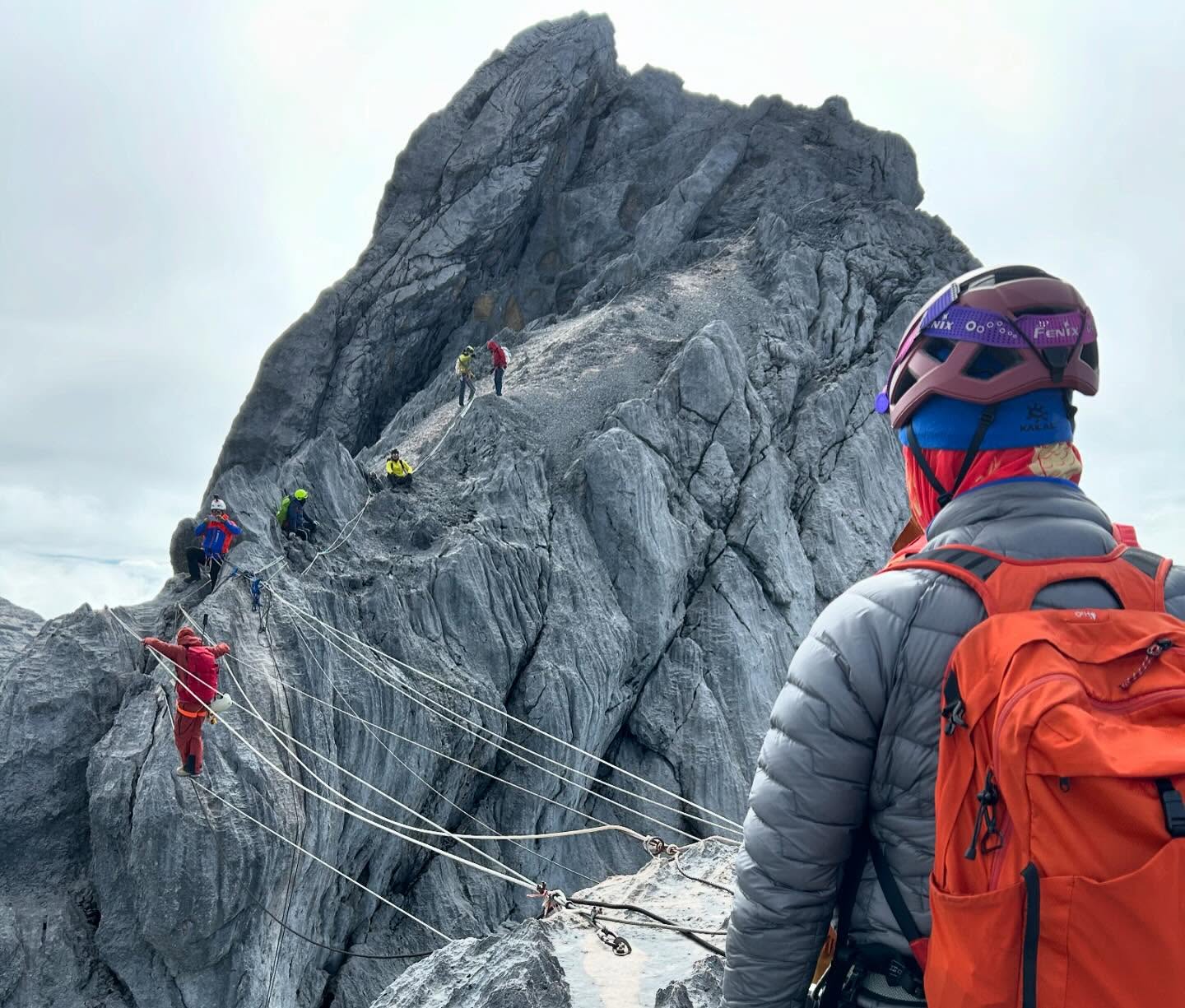
The Carstensz Pyramid expedition route follows a sharp limestone ridge characterized by:
- Steep rock faces
- Exposed traverses with significant drop-offs
- Fixed ropes on vertical sections
- Rappelling during descent
Although the altitude is lower than Himalayan peaks, constant rain, high humidity, and sudden weather changes increase the technical difficulty. Wet limestone can be extremely slippery, making professional guidance and proper equipment critical.
Altitude & Acclimatization
At 4,884 meters, altitude sickness is still a factor. A structured Carstensz Pyramid expedition itinerary includes acclimatization hikes and training climbs around base camp to reduce risk and improve summit chances.
Helicopter access allows climbers to reach altitude quickly, making proper acclimatization planning a key component of any successful expedition.
Permits & Regulations
Climbing Carstensz Pyramid requires multiple layers of authorization, including:
- Indonesian government permits
- Local Papua authority approvals
- Community access agreements
Permit processing can be time-consuming and unpredictable, which is why choosing an experienced Carstensz Pyramid tour operator is essential. Our expedition team manages all permits and liaises directly with local authorities to ensure smooth access.
Who Is This Expedition For?
The Carstensz Pyramid expedition is ideal for:
- Seven Summits climbers
- Experienced rock climbers seeking a rare objective
- Adventurers looking for a remote and exclusive expedition
- Climbers preparing for more technical alpine objectives
This climb is not suitable for beginners and should only be attempted by climbers with prior technical experience.
Why Professional Organization Matters
Due to the remoteness, political sensitivity, and technical nature of the climb, a fully guided Carstensz Pyramid expedition significantly increases safety and success rates. From helicopter coordination to emergency response planning, professional logistics turn a complex challenge into a well-managed adventure.
A well-organized Carstensz Pyramid climbing package ensures:
- Efficient use of weather windows
- Reduced risk exposure
- Compliance with all legal requirements
- Focus on the climb—not the complications
Route Description & Technical Difficulty
The Carstensz Pyramid route is a highly technical limestone climb that sets it apart from all other Seven Summits. Unlike trekking peaks such as Kilimanjaro or Elbrus, the ascent of Puncak Jaya involves exposed rock climbing, fixed ropes, and rappelling, making it one of the most technically demanding summits in the Seven Summits challenge.
Standard Route to the Summit
The standard Carstensz Pyramid climbing route follows a narrow limestone ridge rising sharply from the surrounding glaciers and valleys. From base camp in the Yellow Valley area, climbers ascend steep rock slabs and gullies before reaching the exposed summit ridge.
Key characteristics of the route include:
- Steep limestone rock with limited natural protection
- Narrow ridgelines with sheer drop-offs on both sides
- Fixed ropes installed on critical vertical sections
- Multiple short pitches requiring careful footwork and balance
The final approach to the summit is both physically demanding and mentally intense, especially in wet or windy conditions.
Technical Difficulty Explained
The technical difficulty of Carstensz Pyramid is moderate to high and should not be underestimated. While the rock climbing grades are not extreme by sport-climbing standards, the exposure, weather, and remote environment significantly increase overall risk.
Climbers must be comfortable with:
- Using a harness and safety lanyards
- Ascending fixed ropes with mechanical ascenders
- Rappelling on descent
- Climbing while continuously clipped to safety lines
- Moving efficiently in wet, slippery limestone conditions
For many climbers, the psychological challenge of exposure is more demanding than the physical climbing itself.
The Famous Summit Ridge & Tyrolean Traverse
One of the most iconic features of the Carstensz Pyramid route is the exposed summit ridge, which includes a short Tyrolean traverse (rope crossing) depending on conditions and route setup. This section requires strong balance, confidence at height, and precise rope-handling skills.
Guides install and manage all fixed ropes, but climbers must actively participate using proper technique and focus.
Weather & Rock Conditions
Weather plays a critical role in determining the difficulty of the Carstensz Pyramid climb. Papua’s mountain climate is:
Highly unpredictable
Prone to sudden rain and fog
Often humid with slick rock surfaces
Wet limestone becomes extremely slippery, increasing the difficulty of even moderate moves. For this reason, summit attempts are carefully timed to coincide with favorable weather windows.
Altitude vs. Technical Challenge
At 4,884 meters, altitude is moderate compared to Himalayan peaks, but climbers should not be misled by the numbers. The technical nature of the route, combined with exposure and weather, makes Carstensz Pyramid more challenging than many higher mountains.
Proper acclimatization, pacing, and hydration are essential for a successful ascent.
Required Skill Level
A guided Carstensz Pyramid climb is suitable for climbers with:
- Previous multi-pitch or alpine rock climbing experience
- Confidence using fixed ropes and rappelling systems
- Strong mental focus in exposed environments
- Good physical conditioning for sustained climbing days
- This route is not suitable for beginners or non-climbers.
Best Time for Carstensz Pyramid Expedition
Choosing the right season is a critical factor in the success of a Carstensz Pyramid expedition. Due to its location in the remote highlands of Papua, Indonesia, weather conditions on Puncak Jaya can change rapidly, directly affecting climbing safety, helicopter access, and summit success.
Best Climbing Season: March to October
The best time to climb Carstensz Pyramid is generally between March and October, when weather patterns are more stable and rainfall is relatively lower compared to the peak monsoon months.
Prime climbing months:
✅ April
✅ May
✅ June
✅ July
✅ August
✅ September
During this period, climbers experience:
- More stable weather windows
- Better visibility on the summit ridge
- Improved helicopter flight reliability
- Safer rock conditions with less rainfall
This season is ideal for a guided Carstensz Pyramid expedition and offers the highest chance of a successful summit.
Months to Avoid: November to February
The period from November to February is considered the least favorable time for a Carstensz Pyramid climb due to:
- Heavy and persistent rainfall
- Increased cloud cover and poor visibility
- Slippery limestone rock surfaces
- Frequent helicopter delays or cancellations
While expeditions are sometimes attempted during these months, the risk level and logistical uncertainty are significantly higher.
Outline Itinerary :
Day 1 – Arrival in Timika
Day 2 – Permit Processing & Preparation
Day 3 – Helicopter Flight to Base Camp
Day 4–6 – Acclimatization & Training
Day 7 – Summit Push (Carstensz Pyramid)
Day 8 – Weather Contingency / Second Summit Attempt
Day 9 – Fly Back to Timika
Day 10 – Departure
(Itinerary may vary depending on weather and permits)
Fixed Departure Dates
| Trip Date | Seats Remaining | |
|---|---|---|
| March 3 - March 12 | 20 Seats Left | Book Now |
Itinerary
Arrival in Timika (TIM)
Upon arrival at Mozes Kilangin Airport, Timika, our expedition team will warmly welcome you and assist with your transfer to the hotel. The rest of the day is free for rest after your journey and to prepare for the expedition ahead.
Overnight: Hotel in Timika
Rest Day & Final Expedition Preparation
Today is dedicated to rest and final logistics. Our team will escort you to the local authorities and immigration office to complete all final climbing permits. If necessary, we will also visit local supermarkets to purchase any last-minute personal items.
Overnight: Hotel in Timika
Timika to Carstensz Pyramid Base Camp (Yellow Valley)
Early morning breakfast will be served at the hotel. After breakfast, we transfer to the airport for a scenic helicopter flight to Yellow Valley Base Camp (4,250 m).
Upon arrival at base camp, you will have free time to rest and begin acclimatization. Light walks around camp, reading, relaxing in the dining tent, and staying well hydrated are strongly recommended.
Overnight: Base Camp (Yellow Valley)
Acclimatization & Rope Training
This day is dedicated to acclimatization and technical preparation. Under the guidance of our professional climbing team, you will participate in rope training, including the use of fixed lines, ascenders, and rappelling techniques.
In the evening, a detailed summit briefing will be conducted to review the route, safety procedures, and timing for the summit push.
Overnight: Base Camp
Summit Day: Carstensz Pyramid (Puncak Jaya – 4,884 m)
Summit day begins very early. Wake-up call is around 01:00 AM, with hot drinks and a light breakfast served in the dining tent. The climb begins at approximately 02:00 AM.
After about 30 minutes of approach, we reach the first technical section where fixed ropes are installed. The route follows the exposed summit ridge, involving ascending and descending fixed lines, multiple rappels, and careful movement across narrow notches.
The limestone rock provides good friction, even in damp conditions, but focus and technical precision are essential throughout the climb. After reaching the summit of Carstensz Pyramid, we descend carefully back to base camp using the same route.
Total climbing time is approximately 10–11 hours round trip, depending on conditions.
Overnight: Base Camp
Contingency / Reserve Summit Days
These days are reserved as buffer days in case of:
- Bad weather
- Helicopter delays
- Additional acclimatization needs
- A second summit attempt if required
Base Camp to Timika
Weather permitting, we pack our equipment early in the morning and prepare for helicopter pickup. The helicopter will transfer the group from Yellow Valley Base Camp back to Timika.
Upon arrival, we transfer to the hotel for rest and celebration. If flight schedules allow, onward connections to Bali may be possible later in the day.
Overnight: Hotel in Timika
Final Departure
Transfer to the airport for your international departure. End of the Carstensz Pyramid expedition.
Includes/Excludes
- Airport pickup and drop-off service in Timika
- 3 nights hotel accommodation in Timika (2 nights before the expedition and 1 night after the climb)
- Round-trip chartered helicopter flight from Timika to Carstensz Pyramid Base Camp (Yellow Valley)
- Full board meals during the expedition, including fresh and nutritious mountain meals
- Personal sleeping tent (1 tent per climber)
- Fully equipped base camp setup, including dining/mess tents, tables, and chairs
- Experienced climbing guide and field assistant (Guides also manage cooking and camp operations)
- Fixed ropes installed on the Carstensz Pyramid climbing route
- All required climbing permits for Carstensz Pyramid (government & local authorities)
- Satellite phone access for emergency use only
- Radio communication support at base camp
- Expedition logistics and coordination throughout the climb
- Visa on arrival for entry into Indonesia
- International flights to and from Timika Airport
- Personal climbing equipment (harness, helmets, boots, clothing, etc.)
- Travel insurance & emergency evacuation coverage (We strongly recommend purchasing trip cancellation insurance and comprehensive climbing coverage)
- Personal expenses at the hotel (laundry, phone calls, minibar, etc.)
- Meals in Timika outside of expedition-provided meals
- Additional costs due to delays or trip extensions caused by bad weather or other unforeseen circumstances
- Costs associated with early departure from the expedition
- Costs for finishing the expedition early
- Tips for guides and field assistants
Photo Gallery
Packing List for Carstensz Pyramid Climbing Package – Guided Puncak Jaya Expedition Indonesia
- Climbing helmet (certified for rock climbing)
- Sun hat or cap (for base camp and warm days)
- Warm beanie or balaclava (for summit and cold nights)
- Sunglasses with UV protection (polarized preferred)
- Headlamp with extra batteries
- Moisture-wicking base layer (synthetic or merino wool)
- Lightweight long-sleeve trekking shirt
- Insulating mid-layer (fleece or lightweight down jacket)
- Waterproof and windproof shell jacket (Gore-Tex or equivalent)
- Lightweight gloves (for climbing & dexterity)
- Warm insulated gloves (for summit push)
- Climbing pants (durable, flexible, weather-resistant)
- Base layer thermal leggings (for cold summit mornings)
- Waterproof over-pants or shell pants (for rainy conditions)
- Hiking socks (synthetic or merino, multiple pairs)
- Summit socks (thicker wool socks for warmth)
- Mountaineering boots (rigid sole, crampon-compatible optional)
- Approach shoes (for base camp walks)
- Gaiters (optional, to keep mud/jungle debris out of boots)
- Climbing harness (adjustable, comfortable for long use)
- Ascenders (jumar) and descenders (figure-8 or ATC device)
- Carabiners (locking and non-locking)
- Prusik cords (for backup safety)
- Climbing rope (provided by operator, optional personal rope)
- Chalk bag (optional for hand grip)
- Daypack (20–30L) for summit attempt
- Dry bags or waterproof stuff sacks (to protect gear)
- Hydration system or water bottles (at least 2L capacity)
- Lightweight trekking poles (optional, helpful in jungle approach)