
Annapurna Circuit Trek


Annapurna Circuit Trek 2026: Cost Details, Itinerary, Preparation Tips & Difficulty
The Annapurna Circuit Trek is one of the most iconic trekking routes in the world, offering a perfect blend of breathtaking Himalayan scenery, diverse landscapes, and rich cultural experiences. Winding through Nepal’s Annapurna region, this trek provides travelers with a unique opportunity to explore lush subtropical forests, terraced farmlands, high mountain passes, and traditional villages, all while being surrounded by some of the highest peaks on Earth.
With its combination of natural beauty and cultural immersion, the Annapurna Circuit is a must-do adventure for trekkers seeking both challenge and reward.
Why Choose the Annapurna Circuit Trek?
- Spectacular Views: Witness iconic peaks such as Annapurna I (8,091m), Dhaulagiri (8,167m), and Machapuchare (6,993m).
- Diverse Landscapes: Experience everything from lush green valleys to arid high-altitude deserts.
- Cultural Richness: Pass through villages of Gurung, Thakali, and Tibetan-influenced communities and experience traditional life firsthand.
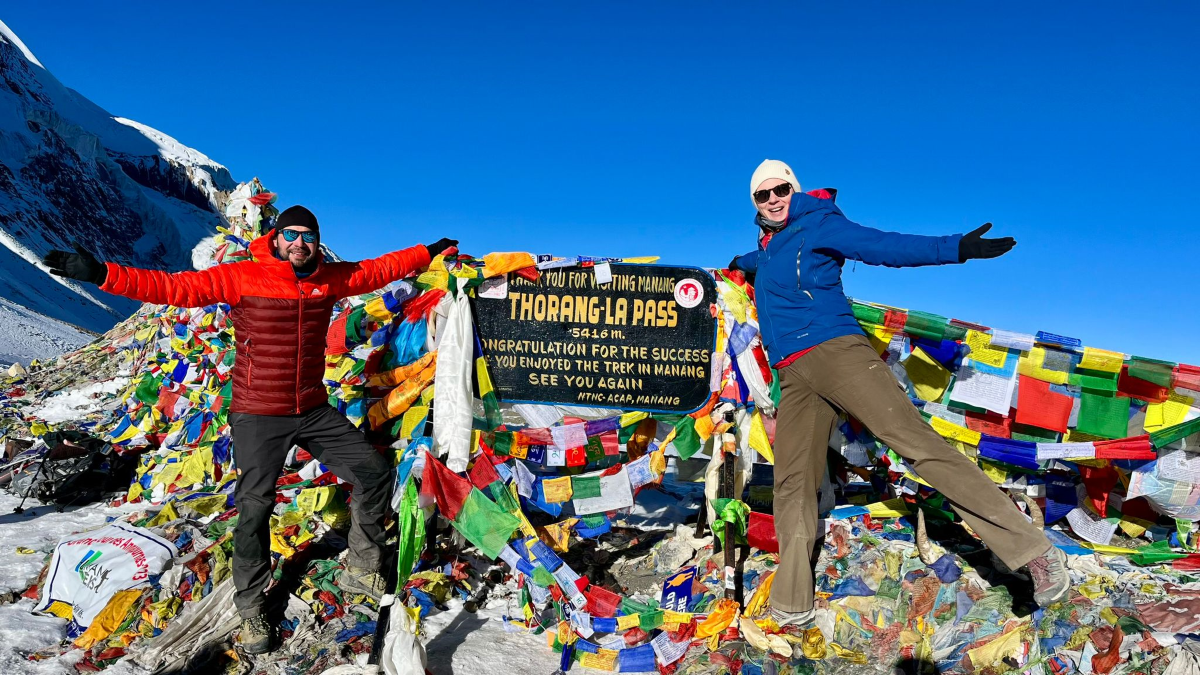
- Adventure & Challenge: Cross Thorong La Pass (5,416m), one of the highest trekking passes in the world.
Best Time to Trek the Annapurna Circuit
Choosing the right time to trek the Annapurna Circuit is crucial for both safety and enjoyment. Weather in the Himalayas can be unpredictable, and each season offers a different experience. Below is a detailed breakdown of the trekking seasons.
1. Autumn (September to November): The Most Popular Season
Autumn is widely regarded as the best season to trek the Annapurna Circuit for good reason.
- Clear Skies: After the monsoon, the air is fresh and skies are generally cloud-free, offering stunning panoramic views of the Annapurna and Dhaulagiri ranges.
- Stable Weather: Moderate daytime temperatures make trekking comfortable, while nights remain cool but manageable.
- Lush Landscapes: Monsoon rains leave terraced fields green and forests vibrant, enhancing the overall scenery.
- Festival Experience: Autumn coincides with major cultural festivals, allowing trekkers to witness local traditions and celebrations.
2. Spring (March to May): Blooming Beauty
Spring is another excellent trekking season, offering the following advantages.
- Rhododendron Bloom: Forests and hillsides are filled with colorful rhododendron flowers, creating beautiful trekking scenery.
- Pleasant Weather: Temperatures are mild at lower altitudes, though higher passes can still be cold.
- Moderate Crowds: Trails are quieter than in autumn while still offering clear mountain views.
- Good Visibility: Melting snow opens trails and viewpoints, making it ideal for photography.
3. Winter (December to February): Cold and Snowy
Winter trekking on the Annapurna Circuit is more challenging but rewarding for experienced trekkers.
- Snow-Capped Peaks: Mountains appear stunning under fresh snow, creating a peaceful winter landscape.
- Fewer Trekkers: Trails and teahouses are quieter due to the off-season.
- Cold Conditions: Temperatures at higher elevations drop well below freezing, and Thorong La Pass may be snow-covered.
- Limited Facilities: Some teahouses close during winter, making careful planning essential.
Winter trekking is recommended only for experienced trekkers with proper cold-weather gear.
For most trekkers, autumn offers the best balance of clear skies, stable weather, and vibrant scenery. Spring is a close second, while winter suits adventure-focused trekkers. Monsoon trekking is generally discouraged due to safety risks.
Annapurna Circuit Trek Difficulty Level: Is It Right for You?
Whether you are a beginner, intermediate, or experienced trekker, understanding the physical, technical, and altitude challenges of the Annapurna Circuit will help you prepare effectively.
1. Overall Trekking Difficulty
The Annapurna Circuit is generally classified as moderate to challenging, depending on your fitness level, trekking experience, and acclimatization.
- Trail Length: Approximately 160 to 230 km, depending on route variation
- Duration: Typically 15 to 21 days, including acclimatization days
- Elevation: Starts around 800 meters at Besisahar and reaches a maximum of 5,416 meters at Thorong La Pass
Unlike shorter and easier trails in Nepal, the Annapurna Circuit requires long daily trekking hours, often 5 to 8 hours, across mixed terrain that includes hills, valleys, river crossings, and high mountain passes.
2. Physical Difficulty
The physical challenge comes mainly from daily trekking distances and continuous elevation gain. Key factors include:
- Long Trekking Days: Expect 6 to 8 hours of trekking daily, often involving steep ascents and descents
- Endurance Required: Strong legs, core strength, and good cardiovascular fitness are essential for sustained trekking
- Carrying Load: Even when hiring porters, carrying a daypack adds to physical demand
Tip: Train with long hikes, stair climbing, and weighted backpacks at least 2 to 3 months before your trek.
3. Technical Difficulty
The Annapurna Circuit is not a technical climb, meaning advanced mountaineering skills are not required. However, some sections involve:
Navigating rocky or uneven trails
Crossing suspension bridges and riverbeds
Walking on snow or ice near Thorong La Pass during early or late seasons
While no ropes or climbing equipment are needed, trekkers should feel confident maintaining balance on rough terrain.
Challenge Zones: High passes such as Thorong La (5,416m) and side treks like Tilicho Lake require extra caution due to thin air and possible snow.
4. Altitude Difficulty
Altitude is the primary challenge of the Annapurna Circuit Trek, making proper acclimatization essential.
Thorong La Pass, at 5,416 meters, is the highest point of the trek and presents a significant risk of altitude sickness.
Common symptoms include headache, nausea, dizziness, fatigue, and insomnia.
Following the “climb high, sleep low” principle is crucial for safe trekking.
Pro Tip: Schedule rest and acclimatization days in Manang (3,500m) to prepare your body for the high passes.
Notable Highlights Along the Annapurna Circuit
- Thorong La Pass with panoramic Himalayan views
- Tilicho Lake, one of the highest lakes in the world and a popular side trek from Manang
- Ghorepani and Poon Hill, famous for sunrise views over the Annapurna range
- Traditional villages showcasing Thakali and Gurung culture, architecture, and hospitality
- Natural hot springs at Tatopani for relaxation and recovery
Tips for a Safe and Successful Trek
1. Acclimatize Properly
Follow the “climb high, sleep low” principle by ascending gradually and spending nights at lower elevations.
Include rest days in Manang or other mid-altitude villages.
Recognize early symptoms such as headache, dizziness, nausea, and fatigue, and descend immediately if symptoms worsen.
Carry medications like Diamox only if prescribed.
Proper acclimatization greatly improves safety and success on the Annapurna Circuit.
2. Stay Hydrated and Maintain Energy Levels
Drink 3 to 4 liters of water daily and add electrolytes to prevent dehydration.
Eat a balanced diet rich in carbohydrates, protein, and healthy fats.
Carry snacks such as nuts, energy bars, and dried fruits.
Limit caffeine and alcohol, as they increase dehydration risk.
Tip: A hydration bladder allows easy access to water during long trekking days.
3. Hire a Local Guide or Porter
Navigation: Guides know the trails, detours, and risky sections, especially in monsoon or winter
Load Management: Porters carry heavy backpacks, allowing you to trek comfortably
Cultural Knowledge: Learn about local traditions, villages, and monasteries
Emergency Support: Guides assist during altitude sickness, injuries, or emergencies
Hiring local guides also supports sustainable tourism in Nepal.
4. Check Weather Conditions Before Trekking
Weather in the Annapurna region can change rapidly and affect trail safety.
Best Seasons: Autumn (September to November) and Spring (March to May)
Avoid Monsoon: June to August due to landslides, flooding, and slippery trails
Winter Conditions: December to February requires preparation for snow, ice, and extreme cold
Carry waterproof jackets, rain gear, and thermal layers.
Daily weather checks are essential for safe trekking.
5. Respect Local Culture and Traditions
The Annapurna Circuit passes through ethnically diverse villages, and respecting local customs enhances the experience.
Dress modestly, covering shoulders and knees, especially in villages and monasteries.
Ask permission before photographing locals or religious sites.
Learn basic Nepali greetings to connect with the community.
Avoid loud behavior, littering, or touching religious artifacts.
Respect for local culture leads to a more meaningful trekking experience.
6. Additional Safety Tips for Annapurna Circuit Trekking
- Travel Insurance: Must include high-altitude trekking and emergency evacuation
- Trekking Gear: Durable trekking shoes, layered clothing and sun protection
- Communication: Carry a local SIM card or satellite phone for emergencies
- Trail Etiquette: Walk on the left and yield to uphill trekkers
- First Aid Kit: Include bandages, blister pads, painkillers and altitude sickness medication
Itinerary
Arrival in Kathmandu (1,275 m) and Trekking Briefing
Upon arrival at Kathmandu Airport, you will need to complete your customs formalities (visa, etc.). We suggest looking for our representative, who will be waiting at the arrival gate holding an Everest View Treks & Expedition display board. You will then be transferred to a three-star hotel, including bed and breakfast.
Kathmandu to Besisahar and Jeep to Dharapani (1,860 m, 5 hrs)
Drive from Kathmandu to Besisahar (830 m) by bus taking approximately 7–9 hours. Besisahar is a scenic town in the mid-hills of Nepal and serves as the gateway to the Annapurna Circuit Trek. From Besisahar continue by local jeep to Dharapani and stay overnight at a teahouse including breakfast, lunch and dinner.
Trek from Dharapani to Chame (2,650 m, 5–6 hrs)
You will head towards Chame, the headquarters of Manang, a district famously known as being beyond the Himalayas in Nepal. You will undoubtedly enjoy your stay in this mountain town nestled in the lap of Annapurna II (7,937 m). Today’s walk is approximately five hours and offers breathtaking views. Check in to a teahouse in Chame including breakfast, lunch and dinner.
Trek from Chame to Upper Pisang (3,300 m / 10,824 ft, 5–6 hrs)
A steep and narrow path through a dense forest leads us to a dramatic curved rock face rising 1,500 m from the river. This is probably the steepest part of the Marshyangdi Valley, so steep that the trail is carved into the vertical rock. After passing this section, the valley opens up to majestic vistas. Right where the valley widens stands Paungda Danda, a massive sloping rock face towering over 5,000 ft (1,500 m) above the trail. We continue trekking before reaching Lower Pisang, where we spend the night, including breakfast, lunch and dinner.
Trek from Upper Pisang to Manang (3,520 m, 5–6 hrs)
Today’s trek begins on a gradual flat path, followed by about one hour of climbing to Ghyaru, a beautiful village. We then continue along a gradual road to Nawal village, where we stop for lunch. Afterward, we trek gradually uphill and downhill toward Manang. The entire walk takes approximately five hours.
This trek brings you to the mountain villages of Manang, where you can experience the prevalent Tibetan Buddhist culture. Along the way, you will enjoy magnificent views of the famous Annapurna peaks, and the serene mountain atmosphere adds to the beauty of your walk. Overnight stay at a teahouse, including breakfast, lunch and dinner.
Manang Acclimatization Day (3,520 m)
Take a day break in Manang to acclimatize to the altitude. Explore the local area, including Gangapurna Glacier and Gangapurna Lake. Get comfortable adjusting to the high-altitude climate. Stay in Manang at a tea house. Meals included: breakfast, lunch and dinner.
Trek from Manang to Yak Kharka (4,010 m, 4–5 hrs)
After breakfast, head towards Yak Kharka, today’s destination. Yak Kharka literally means ‘yak pasture land.’ Along the trail, you will come across these mountain giants and enjoy the stunning mountain views and beautiful atmosphere during your 5–6 hour walk. Overnight stay at a tea house. Meals included: breakfast, lunch and dinner.
Trek from Yak Kharka to Thorongphedi / Thorong High Camp (4,400 m, 4–5 hrs)
After having breakfast in the morning, start your walk of the day to Thorongphedi, the base of the Thorong-La pass. A slow-paced 5-hour walk takes you to your overnight stay. Enjoy the cool mountain atmosphere.
Thorongphedi to Muktinath via Thorong Pass (3,800 m, 8–9 hrs)
Today is a long day of walking and the highlight of this trip. Wake up very early in the morning to start your adventure towards the highest pass, Thorong Pass. A slow-paced uphill walk takes about 4–5 hours to reach the pass. At the top, you will feel like you have conquered everything, and the view makes you forget all the effort and difficulties you faced to get there. You have reached the highlight of this trip. From here, your walk descends towards Muktinath, which takes about 6 hours. Overnight stay at a tea house. Meals included: breakfast, lunch and dinner.
Muktinath to Jomsom via Lubra Village
Muktinath is an important pilgrimage site for both Hindus and Buddhists. In the morning, visit the Vishnu Temple and the nearby gompa. Then descend from Ranipauwa village along the steep barren hillside, continuing toward Kagbeni and onward to Jomsom. Upon arrival, settle in at a teahouse for an overnight stay.
Fly Back to Pokhara – Connecting Flight to Kathmandu
After breakfast, fly from Jomsom to Pokhara, then take a connecting flight to Kathmandu. Upon arrival in Kathmandu, you will be transferred to your hotel. Spend the afternoon relaxing or exploring the city with optional sightseeing.
Fly Home – Farewell, Friends
You are saying goodbye to the mountains as your journey in Nepal comes to an end today. We hope you enjoyed the tour with us and are sure you will return for another adventure in the Himalayas. Approximately three hours before your scheduled flight, a representative from EVT will transfer you to the airport. On your way home, you will have plenty of time to plan your next adventure in the wonderful country of Nepal.
Includes/Excludes
- Arrival-Departure from Airport to Hotel and Vice-Versa.
- Kathmandu Hotel two nights with bed and breakfast plan.
- Best available lodge and tea house accommodation during the trek.
- All food ; Breakfast, Lunch and dinner during the trekking
- A trekking or hiking leader – Fluent English speaking, experienced, knowledgeable with assistant trek guide (4 hikers:1 assistant guide) and needed Sherpa porters (2 trekkers:1 porter) together with their payments, assurance, gears, foods and accommodations.
- All necessary national park fees, permits and paper works (Annapurna Conservation park permits and TIMS)
- All guide and porter salary and food insurance.Gov taxes.
- All ground transportation.
- Fresh Fruit after dinner everyday
- 1 PC snickers or mars chocolate each person every day.
- 3 cup tea, or Coffee with meal B/L/D.
- Trek Completion Certificate
- Complimentary Trekking Kit bag
- Farewell dinner in Kathmandu
- Trekking Map
- First Aid Kit
- Nepal Visa fees on your airport arrival (You should bring accurate USD cash and two passport size picture)
- Personal expenses (Shopping, Laundry, bar bills, battery recharge, mineral water or boiled water, Phone calls, hot shower etc)
- Your Lunch and dinners in Kathmandu (This apply also early come back from trek then the fixed itinerary)
- Extra night accommodation in Kathmandu than above itinerary.
- Tips for guides and porters
- Rescue in case of emergency.
Packing List for Annapurna Circuit Trek
Base Layers:
- Moisture-wicking t-shirts (synthetic or merino wool)
- Thermal underwear for warmth in high-altitude sections
- Long-sleeve shirts for sun and insect protection
Insulating Layers:
- Fleece jacket or pullover
- Down jacket for cold nights at high camps
- Insulated pants for Thorong La and high-altitude stops
Outer Layers:
- Waterproof and windproof jacket (Gore-Tex or similar)
- Waterproof trekking pants
- Rain poncho or rain cover for backpack
Other Essentials:
- Trekking socks (wool or synthetic, 3–4 pairs)
- Gloves: lightweight for day, insulated for high altitudes
- Hat or beanie for warmth
- Sun hat or cap for lower altitudes
- Buff or scarf for dust and cold protection
- Trekking boots: Sturdy, waterproof, broken-in boots are essential
- Camp shoes or sandals for evenings in teahouses
- Gaiters for snow or muddy sections (optional but useful)
- Comfortable socks: liner socks to prevent blisters
Tip: Make sure boots are worn-in to prevent blisters on multi-day hikes
- Main backpack: 50–65L for a 14–21 day trek
- Daypack: 20–30L for daily essentials, snacks, water, camera
- Rain cover for backpack
- Dry bags or ziplock bags to protect clothes and electronics from moisture