Aconcagua Expedition – 2026 via Normal Route (6,962 m)
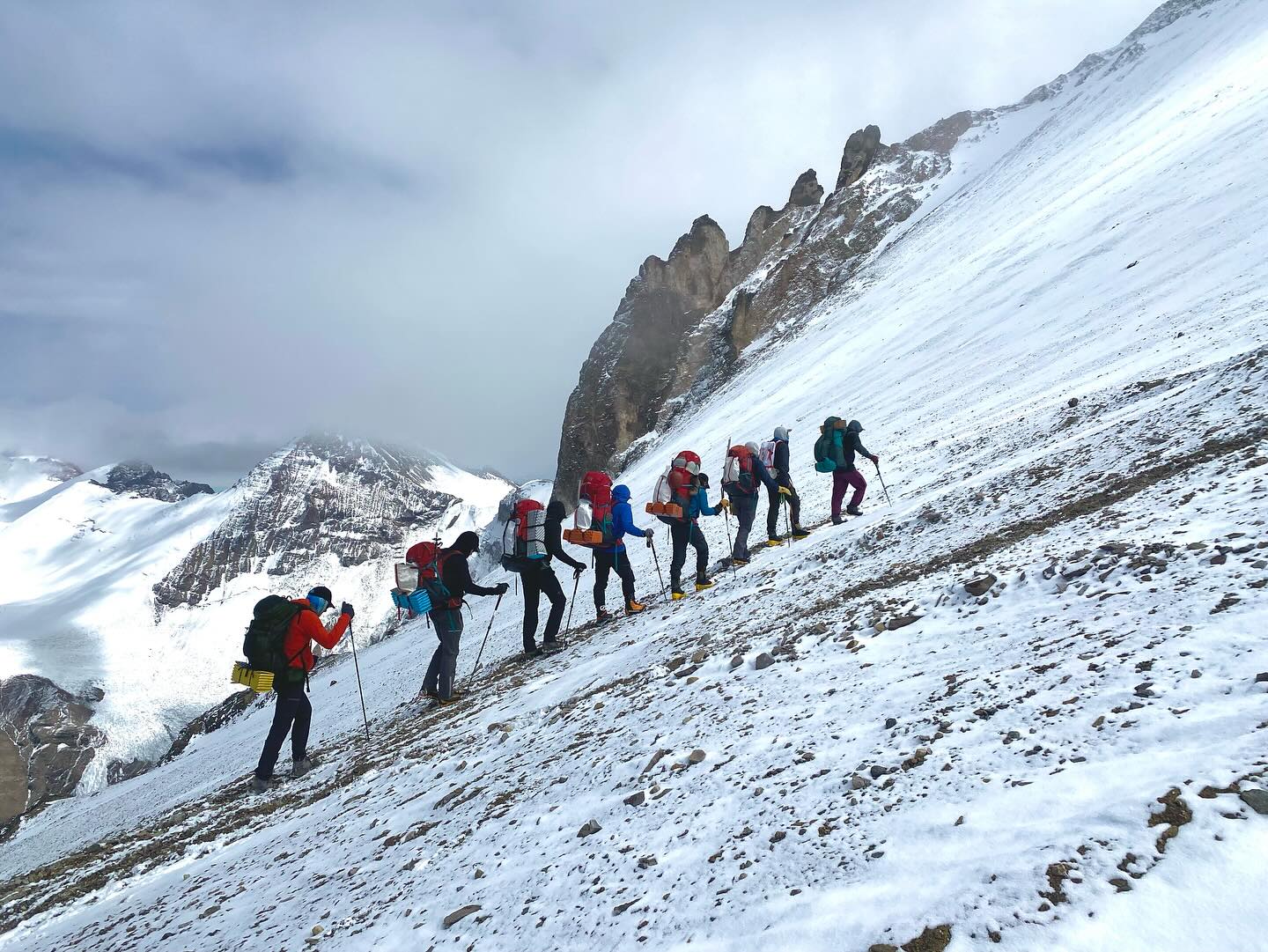


Climb Aconcagua (6,962 m), the highest mountain in the Americas and the tallest peak outside Asia, on a carefully designed 18-day expedition via the Normal Route. This classic ascent offers breathtaking scenery, progressive acclimatization, and a non-technical route that rewards strong trekkers and mountaineers with one of the world’s great summits.
Our program is structured to maximize safety, acclimatization, and summit success, including multiple carry days, rest days at Base Camp, and two reserve summit days. From the vineyards of Mendoza to the immense high camps above Plaza de Mulas, this expedition is a true journey into high-altitude mountaineering.
Why Choose This Aconcagua Expedition?
- Optimal acclimatization itinerary with extra rest and carry days
- Experienced, certified mountain guides
- Mule support for personal and group equipment
- Comfortable Base Camp services at Plaza de Mulas
- Aconcagua climbing permits arranged in advance
- Two reserve summit days for weather and acclimatization
- Nutritious meals designed for high-altitude performance
Difficulty & Experience Required
- Difficulty: Challenging / High-Altitude Mountaineering
- Technical Skills: Non-technical route, but crampon use recommended
- Experience Required: Strong trekking background above 4,500 m highly recommended
- Fitness Level: Excellent cardiovascular endurance and mental resilience
Best Season to Climb Aconcagua
- Mid-November to late February
- Best conditions: December & January
Safety & Acclimatization
- Gradual altitude gain with multiple rest days
- Professional guides monitoring health daily
- Emergency protocols and evacuation coordination
- Weather-based decision making prioritized over summit success
Short Itinerary of Aconcagua Expedition
Day 01 – Arrival in Mendoza (760 m)
Day 02 – Mendoza → Puente de Inca (2,700 m)
Day 03 – Puente de Inca → Confluencia (3,390 m)
Day 04 – Acclimatization Trek to Plaza Francia (4,000 m)
Day 05 – Confluencia → Plaza de Mulas Base Camp (4,300 m)
Day 06 – Rest Day at Plaza de Mulas
Day 07 – Carry to Camp 1 (5,050 m) & Return
Day 08 – Rest Day at Plaza de Mulas
Day 09 – Ascent to Camp 1: Plaza Canadá (5,050 m)
Day 10 – Ascent to Camp 2: Nido de Cóndores (5,550 m)
Day 11 – Acclimatization at Camp 2
Day 12 – Ascent to Camp 3: Plaza Colera (5,970 m)
Day 13 – Summit Day (6,962 m)
Days 14–15 – Reserve Summit Days
Day 16 – Descend to Plaza de Mulas (4,300 m)
Day 17 – Plaza de Mulas → Mendoza
Day 18 – Mendoza
Itinerary
Arrival in Mendoza (760 m)
Your Aconcagua expedition begins in Mendoza, Argentina. Upon arrival at Mendoza International Airport, you will be met by a representative and transferred to your hotel. After time to rest and recover from your journey, we gather for an expedition briefing where you will meet your mountain guides and fellow climbers.
- Accommodation: Hotel (double or triple room)
- Transport: Airport to hotel
Mendoza to Puente de Inca (2,700 m)
After breakfast, we visit our local office to collect climbing permits and finalize expedition logistics. We then travel by private vehicle toward the Andes, reaching our logistics base in Puente de Inca. Here, equipment and personal loads are organized for mule transport into the park.
- Meals: Breakfast, Dinner
- Transport: Mendoza to Puente de Inca
Puente de Inca to Confluencia (3,390 m)
We transfer to Horcones, the entrance of Aconcagua Provincial Park. After presenting permits at the ranger station, we begin our first trek, hiking approximately 4–5 hours to Confluencia Camp. Throughout the walk, we enjoy constant views of Aconcagua’s dramatic South Face.
- Accommodation: Tents or dormitory dome
- Meals: Breakfast, Lunch Box, Dinner
- Transport: Puente de Inca to Horcones
Acclimatization Hike to Plaza Francia (4,000 m)
This acclimatization day significantly improves our chances of success later on. We hike to Plaza Francia, one of the most impressive viewpoints in the park, offering a close-up look at the massive South Wall of Aconcagua. After taking in the scenery, we return to Confluencia.
- Accommodation: Tents or dormitory dome
- Meals: Breakfast, Lunch Box, Dinner
Confluencia to Plaza de Mulas Base Camp (4,300 m)
After an early start, we leave Confluencia and hike toward Plaza de Mulas, the main base camp on Aconcagua. The route crosses Playa Ancha and climbs the demanding Cuesta Brava before reaching base camp. A warm welcome and well-earned meal await us upon arrival.
- Accommodation: Tents or dormitory dome
- Meals: Breakfast, Lunch Box, Dinner
Rest Day at Plaza de Mulas (4,300 m)
A full rest day at Base Camp allows the body to adjust to altitude. This is a good opportunity to shower, relax, and explore the surrounding area. Together with the guides, we organize shared equipment and food for the upcoming carries to higher camps.
- Accommodation: Tents or dormitory dome
- Meals: Breakfast, Lunch, Dinner
Carry to Camp 1 (5,050 m) and Return
Today we carry equipment and supplies to Camp 1, gaining nearly 700 meters in elevation. After caching the load, we descend back to Plaza de Mulas to rest. This strategy improves acclimatization and reduces the weight carried on future ascents.
Accommodation: Plaza de Mulas
Meals: Breakfast, Lunch, Dinner
Rest Day at Plaza de Mulas (4,300 m)
A second rest day at Base Camp helps recovery after the carry day. Proper rest at this stage plays a crucial role in successful acclimatization and overall summit chances.
- Accommodation: Tents or dormitory dome
- Meals: Breakfast, Lunch, Dinner
Ascent to Camp 1: Plaza Canadá (5,050 m)
With acclimatization well underway, we leave Base Camp and ascend to Plaza Canadá, our first high camp. This marks the beginning of our continuous move toward the summit.
Accommodation: Tents
Meals: Breakfast, Lunch, Dinner
Ascent to Camp 2: Nido de Cóndores (5,550 m)
We continue ascending to Nido de Cóndores, one of the most scenic camps on Aconcagua. From here, panoramic views stretch across the Andes, often accompanied by unforgettable sunsets.
Accommodation: Tents
Meals: Breakfast, Lunch, Dinner
Acclimatization Day at Camp 2 (5,550 m)
This day is dedicated to rest and further acclimatization. Depending on conditions and group strength, the guide may suggest short hikes above camp. The primary goal is recovery and preparation for higher altitude.
Accommodation: Tents
Meals: Breakfast, Lunch, Dinner
Ascent to Camp 3: Plaza Colera (5,970 m)
A steady climb brings us to Plaza Colera, our final high camp located along the North Ridge. Upon arrival, we set up camp, hydrate, and rest. The guide conducts individual assessments and reviews summit-day strategy and timing.
- Accommodation: Tents
- Meals: Breakfast, Lunch, Dinner
Summit Day: Aconcagua (6,962 m)
We start very early for the most challenging day of the expedition. Following the Normal Route, we pass Refugio Independencia, climb to Portezuelo del Viento, traverse the upper slopes, and tackle La Canaleta before reaching the summit ridge. Standing on the summit of Aconcagua, the highest point in the Americas, offers unmatched views and a powerful sense of achievement. After time on top, we descend carefully back to Camp 3.
- Accommodation: Tents
- Meals: Breakfast, Lunch, Dinner
Days 14–15 – Reserve Summit Days
Two extra days are built into the itinerary to allow flexibility for weather conditions or additional acclimatization. These days greatly increase the likelihood of a successful and safe summit.
- Accommodation: Tents
- Meals: Breakfast, Lunch, Dinner
Day 16 – Descent to Plaza de Mulas (4,300 m)
We descend from the high camps back to Plaza de Mulas. A comfortable evening at Base Camp allows us to rest and celebrate the accomplishment.
- Accommodation: Tents or dormitory dome
- Meals: Breakfast, Lunch, Dinner
Day 17 – Plaza de Mulas to Mendoza
After breakfast, we hike down to Horcones, where private transportation awaits. We return to Mendoza and check back into the hotel for a well-earned rest.
Accommodation: Hotel (double or triple room)
- Meals: Breakfast, Lunch Box
- Transport: Horcones to Mendoza
Day 18 – Departure from Mendoza
Breakfast at the hotel. End of expedition services.
- Accommodation: Not included
Includes/Excludes
- Professional Guides: Highly experienced Aconcagua guides, certified by national and international mountain guide organizations, including IFMGA-trained professionals.
- Private Transportation: All scheduled ground transfers in private vehicles, including airport, Mendoza, Puente de Inca, and Horcones.
- Accommodation: 3-star hotel in Mendoza, shared lodging in Puente de Inca, and double/triple tents or domes at mountain camps.
- Meals: All meals included on the mountain, with fresh food at Base Camp and high-energy meals at high camps; special diets available on request.
- Base Camp Facilities: Dining tents, rest areas, restrooms, and solar-heated hot showers at Base Camp.
- Mule Load Transport: Up to 15 kg of personal equipment transported by freight mules to and from Base Camp.
- Drinking Water: Purified hot and cold drinking water provided at all Base Camps.
- Communication & Power: Satellite Wi-Fi, radio communication, and free charging of devices using solar power (availability dependent).
- Equipment Storage: Secure storage for personal gear in Puente de Inca and Plaza de Mulas
- Porter Services (Optional): Transport of common equipment included; personal high-altitude porters available at extra cost.
- Medical & Safety Support: Oxygen, oximeters, hyperbaric chamber at Base Camp, and medical kits carried by guides
- Permit Assistance: Full assistance with Aconcagua Park permits (permit fee not included).
- Aconcagua Park Permit: Park entrance and ascent permit fees (vary by nationality and route; discounted when booked through us).
- Mandatory Insurance: High-altitude insurance covering rescue and helicopter evacuation is required.
- ravel Insurance: Recommended to cover trip interruption, unused reserve days, extra accommodation, flights, and personal expenses.
- Personal Equipment: All personal mountaineering and high-altitude gear.
- Additional Logistics: Extra mule loads, saddle mule, private vehicle transfers, additional nights, meals, or services due to early exit or itinerary changes.
- Personal Porter: High-altitude porter services for personal gear (available at extra cost).
- City Expenses: Meals not specified in the itinerary, drinks, laundry, additional showers, tips, and other personal expenses.
- Payment Fees: Bank charges, taxes, credit card fees, or other administrative surcharges.
- Hotel–Airport Transfers (Out): Transportation from hotel to airport at the end of the program.
- Unspecified Services: Any service not clearly listed as included in the program.
Photo Gallery
Packing List for Aconcagua Expedition – 2026 via Normal Route (6,962 m)
- Warm beanie or insulated hat
- Sun hat or cap with neck protection
- Balaclava or thermal face mask
- Neck gaiter / Buff (wind protection)
- High-altitude sunglasses (Category 4 UV protection)
- Ski or mountaineering goggles (for wind and snow)
- Thermal base layer tops (2–3, merino or synthetic)
- Mid-layer fleece or softshell jackets (2)
- Insulated down jacket (expedition-grade, –25°C to –30°C)
- Waterproof shell jacket (Gore-Tex or equivalent)
- Thermal base layer bottoms (2–3)
- Softshell or trekking pants
- Insulated down pants (for high camps & summit day)
- Waterproof shell pants
- Liner gloves (lightweight)
- Insulated gloves (medium warmth)
- High-altitude mittens or extreme cold gloves (summit day)
- Double or triple high-altitude mountaineering boots (–30°C rated)
- Gaiters (compatible with boots)
- Camp shoes or down booties
- Trekking socks (4–6 pairs, wool or synthetic)
- Backpack (65–75 L)
- Daypack (30–40 L)
- Trekking poles
- Crampons (compatible with boots)
- Headlamp with spare batteries
- Sleeping bag (–20°C or colder recommended)
- Sleeping bag liner
- Water bottles or hydration system (2–3 L capacity)
- Thermos (recommended for summit day)
- Sunscreen SPF 50+
- Lip balm with SPF
- Personal first-aid kit & medications
- Personal toiletries & wet wipes
- Power bank and charging cables
- Personal snacks & energy food